

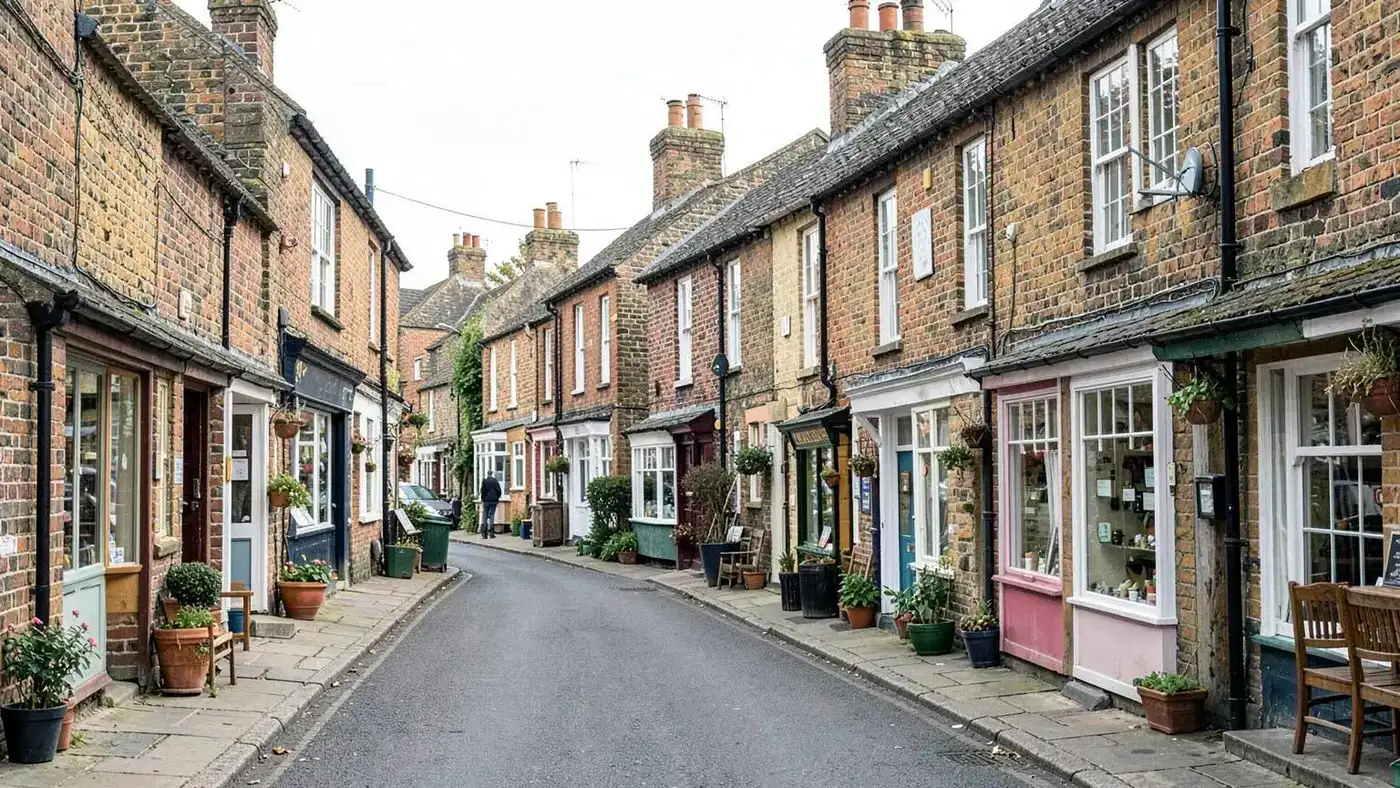






Housing stock in St Albans
The historic core around the Cathedral, French Row and Fishpool Street contains a significant number of listed and locally listed buildings with solid brick or timber-framed walls, where wall insulation is rarely straightforward and ratings often sit in the D-E range even with modern heating installed. Fleetville and Marshalswick have large areas of 1930s semis and terraces, generally cavity-walled and a good candidate for insulation top-ups that lift a rating by a full band. Sopwell and London Colney add post-war and 1960s-70s housing with a wider mix of construction types, while newer developments around the Camp and Hill End areas achieve higher SAP-assessed ratings with modern insulation standards and, increasingly, air source heat pumps. Flats above shops in the city centre vary widely depending on when they were last refurbished.
Landlord rules and licensing in St Albans
Rental properties in St Albans must meet the band E minimum under MEES, and landlords letting older terraces or flats above shops in the conservation area should budget time to explore compliant improvements given the added constraints on external wall changes. St Albans City and District Council does not run a blanket additional licensing scheme in the way some London boroughs do, though mandatory licensing still applies to qualifying larger HMOs, so always check the current position with the council's private housing team before a licence application. The extensive conservation areas covering the city centre and several suburban roads mean solid wall insulation and replacement windows often need planning or listed building consent, which we flag clearly where it affects achievable ratings.
What we commonly find here
- Solid brick walls in the city centre core limiting achievable ratings without internal insulation
- 1930s semis in Marshalswick and Fleetville with cavity walls that are often still unfilled
- Sash or timber casement windows in listed properties retained for character rather than upgraded
- Older back boilers in some Victorian terraces around Camp Road and Hatfield Road
- Loft insulation present but below current thickness recommendations in many post-war houses
- Flats above city-centre shops with variable glazing and heating standards depending on refurbishment history
Working in St Albans
St Albans is around 15 miles from Wembley, typically a 30-40 minute drive via the A405 and A414, and sits in our mid-range travel band with no congestion charge or ULEZ implications. Parking in the city centre is controlled and can be busy on market days (Wednesday and Saturday), so we generally use one of the council car parks near the Cathedral or St Peter's Street; suburban roads are usually easier. A domestic visit typically takes 25-40 minutes. We lodge certificates on the national EPC Register the same or next working day and can often offer a same-day appointment.
Listed buildings and conservation areas
A large part of central St Albans falls within a conservation area, and many individual buildings are listed. We still complete a standard RdSAP survey for these properties, but the report will often note that certain improvements, such as external wall insulation or double glazing to street-facing elevations, would need planning or listed building consent, which shapes realistic MEES compliance routes for landlords.
EPCs for St Albans new builds
Development around the Camp, Hill End and North St Albans areas continues to bring new housing to the city's edges. We produce SAP calculations at design and as-built stage for these schemes, working directly with developers, architects and self-builders.
What an EPC costs in St Albans
Indicative EPC prices in St Albans
| Property | Typical scope | Price from |
|---|---|---|
| Studio or 1-bed flat | Domestic EPC | from £40 |
| 2-3 bed house or flat | Domestic EPC | from £50 |
| 4-5 bed house | Domestic EPC | from £70 |
| Large or period property | Domestic EPC | from £100 |
| Shop, office or small unit | Commercial EPC | from £150 |
When you need an EPC in St Albans
A valid Energy Performance Certificate is required before a home in St Albans is marketed for sale or let, and it lasts ten years. Under the Minimum Energy Efficiency Standard a rented home must reach at least band E, and the government has proposed raising that to band C for rented homes by 2030, so a current certificate is also the starting point for planning upgrades. New builds and material conversions need SAP calculations at design stage and an on-completion EPC, and commercial premises need a non-domestic certificate produced on the same basis.