

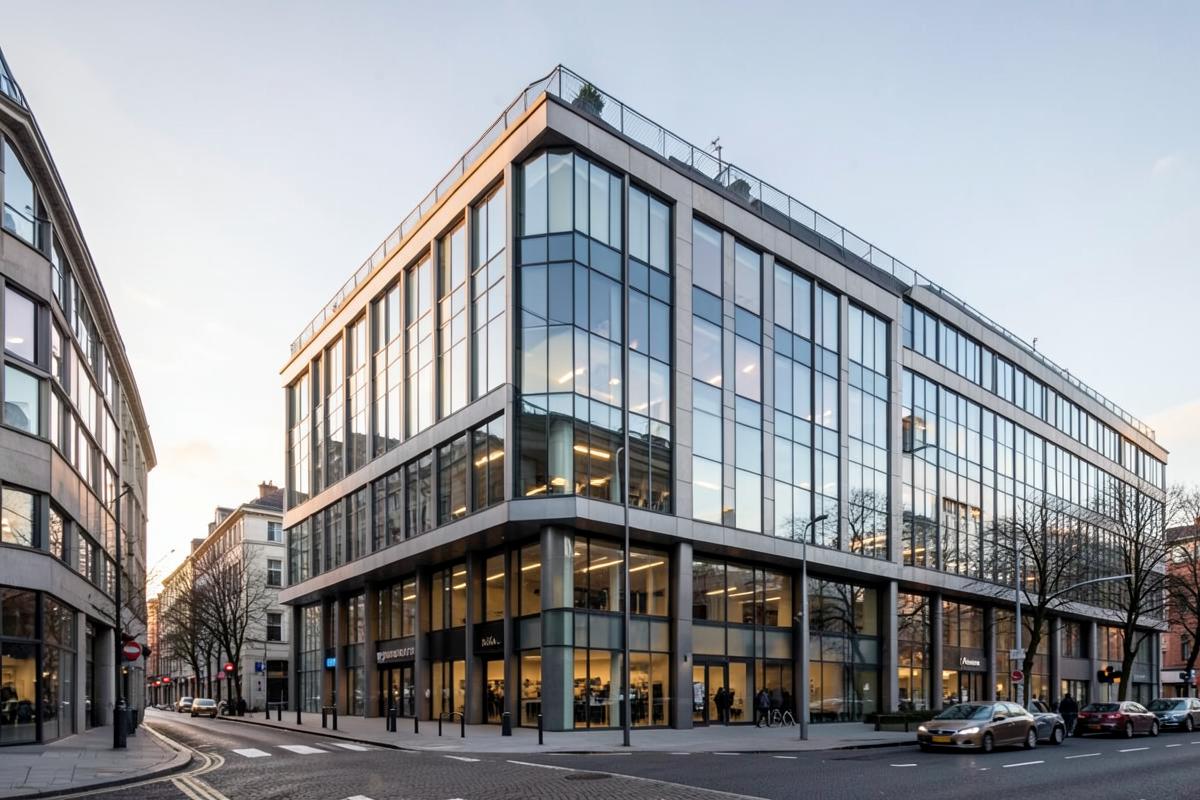






What commercial premises legally need
Three duties run in parallel. A non-domestic EPC is required whenever the premises are constructed, sold or let, produced from an SBEM model of the building's fabric, heating, cooling, ventilation and lighting. A fire risk assessment is required under the Regulatory Reform (Fire Safety) Order 2005 for any premises where people work, and it must be written down where five or more people are employed — reviewed regularly and after any material change to layout, use or occupancy. Alongside those sit the maintenance regimes: fire alarm servicing to BS 5839, emergency lighting testing to BS 5266, and periodic inspection of the electrical installation. MEES applies to commercial lettings as well as residential, so a poor rating can stop a letting outright.
- Non-domestic EPC via SBEM on construction, sale or letting
- Written fire risk assessment for the workplace
- Fire alarm servicing to BS 5839
- Emergency lighting testing to BS 5266
- Periodic electrical inspection and report
- MEES check before marketing the space
What the package covers
Scope is set by the building and its use, but a typical office, retail or light industrial instruction includes the following.
- Full measured survey and SBEM model, EPC lodged on the non-domestic register
- Recommendation report with the measures that actually move the rating
- Fire risk assessment with significant findings and a prioritised action plan
- Fire alarm and emergency lighting condition review and testing
- Electrical installation condition report with C1, C2 and C3 items itemised
- One consolidated invoice and a single compliance folder
The MEES problem in commercial space
A commercial unit below band E cannot generally be let without a registered exemption, and the practical effect lands at the worst moment — a tenant ready to sign and a rating that blocks the deal. Commercial ratings are far more sensitive to services than to fabric: lighting, controls, heating efficiency and ventilation strategy usually decide the band, which is good news because those are the cheapest things to change. Our assessor will tell you on the day which measures move the rating and roughly what they cost, so you can decide whether to spend £4,000 on lighting or lose the letting. That advice is included, not a separate consultancy exercise.
Working around a trading business
Commercial surveys have to fit the business, not the other way round. We survey retail units before opening or after closing, offices around meeting-room bookings, and industrial units around shift patterns, with out-of-hours and weekend attendance available. Where a landlord is instructing on a tenanted building we handle the tenant liaison directly, with written notice and a clear explanation of what the surveyor needs to see, which is usually plant rooms, roof voids and riser cupboards rather than anything disruptive.
What it costs
Non-domestic EPCs are priced on floor area, building complexity and the number of separately serviced zones, so a single-zone retail unit and a multi-tenanted office of the same area are not the same job. Fire risk assessments are priced on floor area, occupancy and layout; alarm and emergency lighting testing on device and luminaire counts; electrical reports on the number of circuits and distribution boards. Everything is quoted in writing after a short conversation about the building, and instructed together the total sits below the sum of separate instructions. Multi-site portfolios are priced per site with a volume rate.