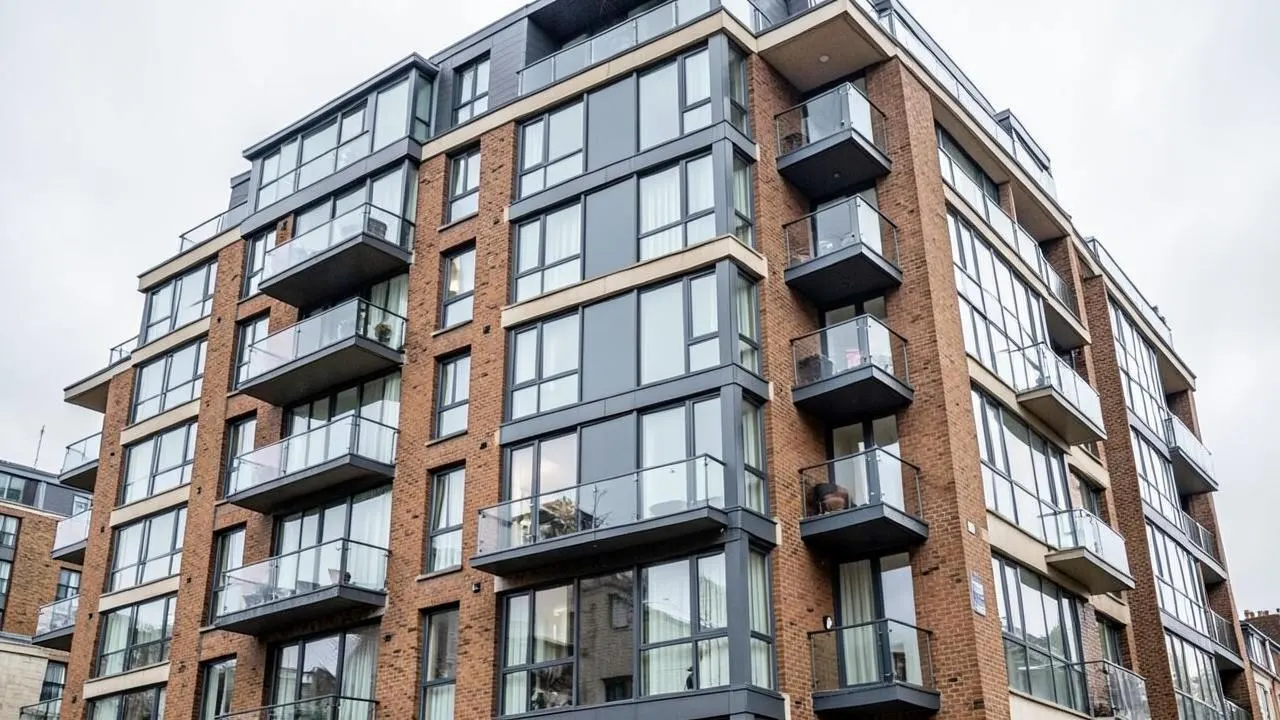







Guide · guides

    EPCs for a block of flats: how many you need and what it costs

    A block does not get one EPC. Each self-contained flat that is sold or let needs its own certificate, which is why blocks are quoted per flat and organised as a single visit programme rather than a string of separate bookings.

    11 min readBy Nabhan Islam Reviewed by Awais Sarwar, MSc Updated 9 Sept 2026

    EPCs for a block of flats: how many you need and what it costs

    AudiKiaGB NewsBudgens
    The short answer

    Each self-contained flat that is being sold or let needs its own EPC — a block is never covered by a single certificate. Communal areas such as stairwells, plant rooms and corridors do not need a domestic EPC in their own right, although a non-domestic EPC can be required where a commercial unit or a separately let non-domestic space forms part of the building. Because the assessor is on site anyway, blocks are priced per flat on a sliding scale rather than at single-property rates, and the whole block is normally surveyed across one or two visit days with a single access contact.

    020 3092 8551

    Certificates required

    one per self-contained flat

    for each flat being sold or let

    Communal areas

    no domestic EPC needed

    non-domestic EPC may apply to commercial parts

    Typical guide rate

    £24-£45 per flat

    falls as the batch grows; confirmed in writing

    Certificate validity

    10 years

    per flat, from the lodgement date

    One certificate per flat, not one per building

    The legal duty attaches to the dwelling being marketed for sale or let, so a block of twenty flats being re-let over a year needs twenty certificates, each recorded on the EPC Register against its own address. Managing agents sometimes expect a single building-level certificate because that is how fire risk assessments and electrical installation reports for communal areas work, but energy assessment does not behave that way: the model runs on the individual dwelling's fabric, heating, glazing and floor position. A top-floor flat under an uninsulated roof and a mid-floor flat with heated neighbours above and below will produce noticeably different ratings even in an identical block.

    • Every self-contained flat sold or let needs its own certificate against its own address
    • Ratings legitimately differ between flats in the same block because of floor position and exposure
    • Each certificate lasts ten years from its own lodgement date, so a block gradually falls out of step
    • A flat schedule listing flat numbers, bedrooms and tenure is the fastest way to get an accurate quote

    Where communal and commercial parts fit in

    Communal stairwells, corridors, bin stores and plant rooms are not dwellings, so they do not receive a domestic EPC. Where a building includes a commercial unit — a shop on the ground floor, a separately let office, a managed commercial space — that unit is a non-domestic property and needs a non-domestic EPC when it is sold or let, produced by a commercially accredited assessor at the appropriate level. Mixed-use buildings therefore often need two workstreams on the same visit: domestic assessments upstairs and a non-domestic assessment for the commercial part. Running both together avoids two mobilisations and keeps one point of contact for the whole building.

    • Communal circulation space needs no domestic EPC of its own
    • Commercial units within the block need non-domestic EPCs when sold or let
    • Mixed-use buildings are best surveyed in one mobilisation covering both workstreams
    • Fire, electrical and energy compliance for communal areas are separate duties with separate documents


    The buildings behind this advice

    AudiKiaGB NewsBudgensPepe's Piri PiriCar Giant

    How a block survey is actually organised

    The practical problem with a block is rarely the assessment; it is access. A batch of thirty flats booked individually can take weeks of phone calls, missed appointments and repeat visits. Handled as a contract, the block is planned as a programme: we agree survey days, confirm which flats are vacant, which are tenanted and where keys sit, and give the access contact a time window per flat rather than an all-day wait. Tenanted flats are notified in advance by the agent or landlord so entry is expected, and any flats missed on the day are collected on a mop-up visit rather than triggering a fresh booking process.

    • Agree survey days up front and work through the block floor by floor
    • Confirm vacant, tenanted and key-held flats before the visit, not on the doorstep
    • One access contact with a per-flat time window cuts failed entries dramatically
    • Missed flats are collected on a planned mop-up rather than rebooked from scratch

    Why per-flat rates fall on a batch

    Single-property pricing carries the full cost of travel, scheduling, access chasing and administration for one certificate. On a block, those costs are spread: one journey, one access contact, one instruction, one invoice and consecutive surveys with no dead travel between them. That is why guide rates for blocks sit well below single-property rates and continue to fall as the batch grows. The honest caveat is that per-flat time does not drop to zero — every flat still needs measuring, photographing, evidence collection and individual lodgement — so beyond a certain point the rate flattens out. Anyone quoting a rate that ignores that is either not visiting every flat or not lodging every certificate properly.

    • Travel, scheduling and administration are shared across the batch, not repeated per flat
    • Consecutive surveys in one building remove dead time between appointments
    • Rates flatten at high volume because survey and lodgement time per flat is irreducible
    • One instruction and one invoice replaces dozens of separate transactions

    What to send us to get a firm price

    A firm per-flat rate needs surprisingly little: the building address, the number of self-contained flats, a rough bedroom mix, whether any commercial units are included, and when the certificates need to be lodged. If a flat schedule already exists in a spreadsheet, sending it as-is is quicker than filling in a form. With that, we confirm a fixed per-flat rate in writing, usually the same day, along with the survey days we can hold and the lodgement date we will work to. Nothing is estimated after the event: the rate you approve is the rate invoiced, with any genuinely additional work — say a commercial unit added later — quoted separately before it is carried out.

    • Building address and number of self-contained flats
    • Approximate bedroom mix and tenure (vacant, tenanted, key-held)
    • Any commercial or non-domestic space in the building
    • The date the certificates must be lodged by

    Written by

    Nabhan Islam

    Head of Marketing & Commercial Lead

    Reviewed by

    Awais Sarwar, MSc

    Accredited Energy Assessor — Accredited domestic and commercial energy assessor, listed on the EPC Register

    11 min readLast reviewed 9 September 2026Facts verified 9 September 2026 Checked quarterly

    Sources

    1. The Energy Performance of Buildings (England and Wales) Regulations 2012 legislation.gov.uk
    2. Find an energy certificate GOV.UK

    Was this page helpful?

    Frequently asked questions

    Call
    Last word

    Ready when you are.

    Quote in 60 seconds. Assessor on site this week. Compliant report in your inbox within 24 hours. That's the whole process.

    020 3092 8551
    Transparent pricing No obligation 1,000+ assessments 100% compliance guarantee
    Awais Sarwar
    — Awais Sarwar, MSc
    MD · 4.9 Google
    4.9 rated
    ·100+ reviews·
    Direct provider
    Call