

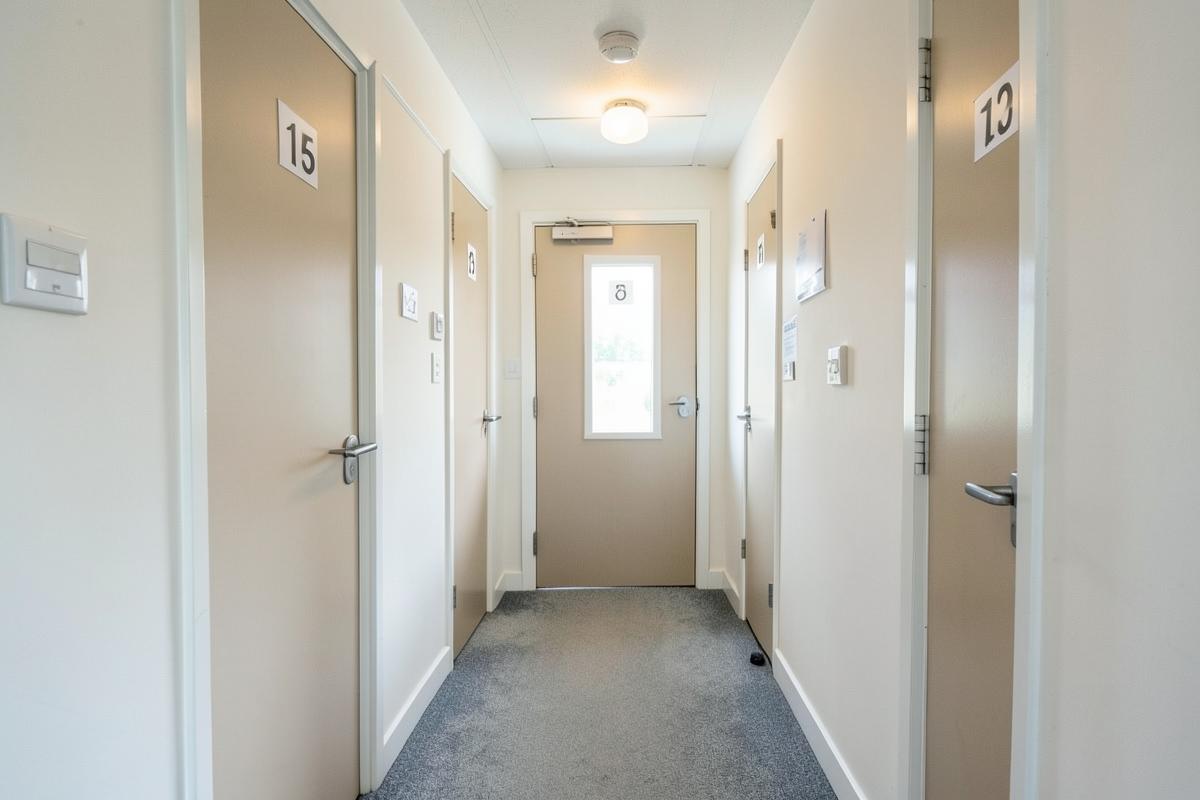






What does an HMO need to be compliant?
An HMO is subject to everything an ordinary let requires plus a layer of fire and management duties that exist because unrelated households share escape routes. In practice a licensing officer will look for a valid EPC at band E or better, a written fire risk assessment covering the whole house rather than just the hallway, a fire detection system of the grade and category appropriate to the layout under BS 5839-6, emergency escape lighting where the escape route is not adequately lit, fire doors to risk rooms, an EICR within five years, gas safety within twelve months, and evidence that alarms and lighting are being tested rather than merely installed. Mandatory licensing applies to houses occupied by five or more people forming two or more households, and many councils operate additional licensing schemes below that threshold.
- EPC at band E or better
- Written fire risk assessment for the whole house
- Fire detection to the right BS 5839-6 grade and category
- Emergency lighting where escape routes need it
- Fire doors and closers to risk rooms
- EICR within five years and gas safety within twelve months
- Testing records, not just installation certificates
Where HMO landlords usually get caught out
Three things, repeatedly. The first is detection grade: a mains-interlinked system that would be fine in a family home is often the wrong specification once the house is let room by room, and a licensing officer will pick that up immediately. The second is the fire risk assessment being written for the common parts only, when in an HMO the assessment has to consider bedrooms, kitchens and the whole escape route as one system. The third is records — a system installed five years ago with no test log behind it is treated as unmaintained, whatever its condition. The package addresses all three at once, because the same instruction covers the assessment, the system and the evidence.
What the package covers
The EPC comes from Team EPC and everything fire and electrical comes from Fire Risk Specialists, coordinated by one contact so the evidence pack arrives complete.
- RdSAP survey and EPC lodged on the register, checked against MEES
- Whole-house fire risk assessment with a prioritised action plan
- Fire detection review against BS 5839-6 grade and category
- Emergency lighting check against BS 5266
- EICR with C1, C2 and C3 items itemised
- A single folder of certificates and test records for licensing
Keeping the tenants on side
Compliance in an HMO means going into occupied bedrooms, and that is where most jobs run into difficulty. We give a single set of dates with a time window per room, write to occupiers in plain language explaining what will happen and how long it takes, and work through the house in one pass rather than returning three times for three trades. Where an occupier refuses access we tell you which items are outstanding and what your options are, rather than quietly issuing a report with gaps in it.
What it costs
The EPC element follows our published bands — £69 for a one to three bedroom flat, £89 for a house up to four bedrooms, £119 for a five to seven bedroom house, plus £7 per extension and £10 for a loft conversion, with travel by zone. The fire risk assessment, detection review, emergency lighting check and EICR are priced on the number of storeys, bedrooms and circuits, and quoted in writing at the same time. Booked as a package the total is below the sum of the individual instructions, and where you run several HMOs the rate falls again with volume.