

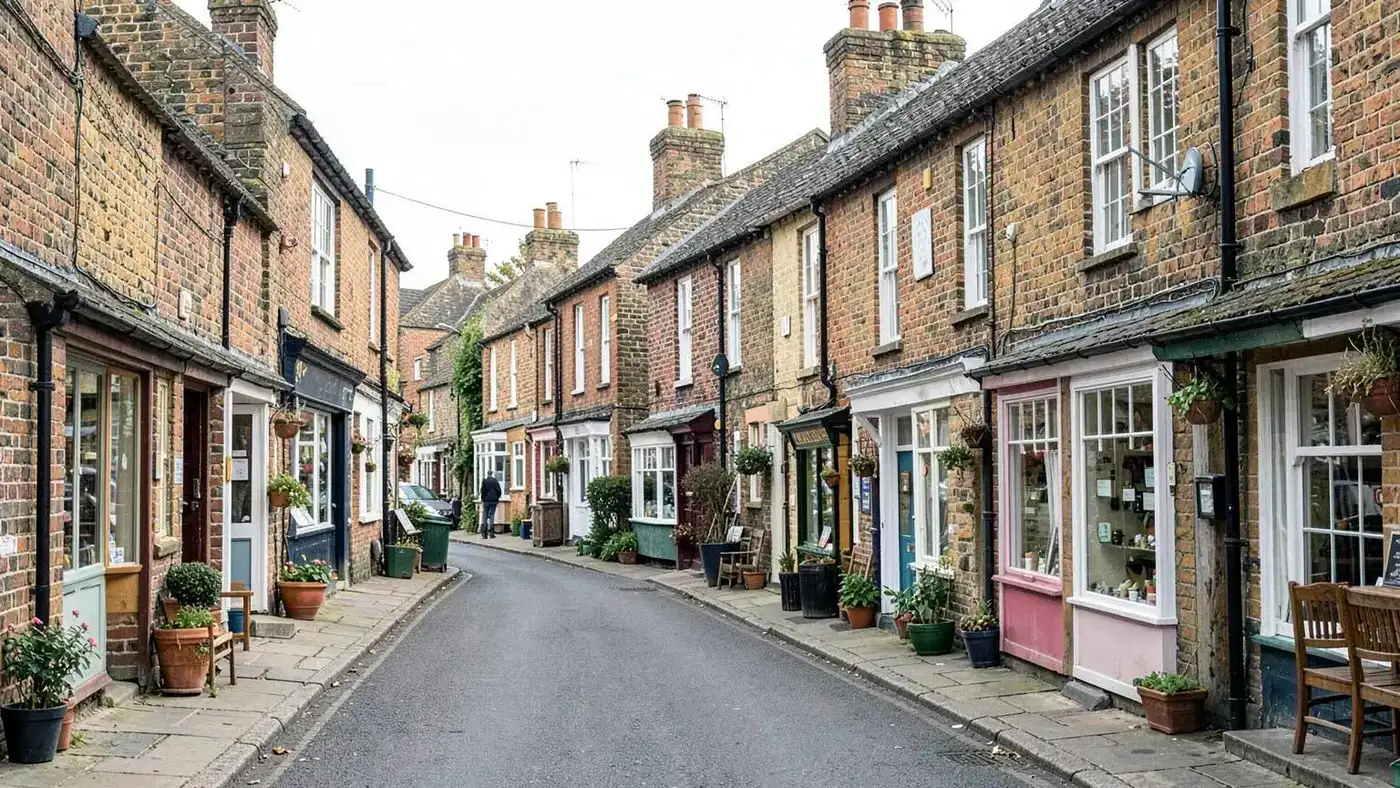






Housing stock in Harrow town centre
Harrow-on-the-Hill has a concentration of large Victorian and Georgian houses, many associated with Harrow School and set within a designated conservation area, generally solid-walled with variable heating standards depending on how much modernisation has taken place. The wider town centre and surrounding roads have extensive 1930s semi-detached and terraced housing, cavity-walled and generally a good candidate for insulation improvements. Flats near St Ann's and the station have grown in number over recent years, built to modern Part L standards and typically assessing in the B-C range. Streets towards Wealdstone and Kenton add further post-war terraced and semi-detached stock.
Landlord rules and licensing in Harrow town centre
Rental properties in Harrow must meet the MEES band E minimum, with the proposed increase to higher standard equivalent to EPC C for all in-scope domestic tenancies by 1 October 2030, subject to Parliamentary approval. Harrow Council operates licensing schemes covering HMOs in parts of the borough, and boundaries are reviewed periodically, so we always advise checking the current scheme before a licence application. The Harrow-on-the-Hill conservation area, along with individual listed buildings connected to the school, means external insulation and window changes there need particular care, while the surrounding 1930s suburbs generally have more straightforward improvement routes.
What we commonly find here
- Solid walls in Harrow-on-the-Hill's Victorian and Georgian houses limiting achievable ratings
- Unfilled cavity walls in 1930s semis across the wider town centre area
- Older gas boilers in unmodernised properties near the school and hill
- Loft insulation topped up unevenly across extended 1930s houses
- New flats near St Ann's and the station achieving strong B-C ratings
- Post-war terraces towards Wealdstone with straightforward cavity wall insulation potential
Working in Harrow town centre
Harrow town centre is only about 4 miles from our north-west London survey base, typically a 15-20 minute drive, our closest travel band with no additional charges applying. Parking is available in council car parks near St Ann's and the Civic Centre, with metered streets closer to the station; Harrow-on-the-Hill has narrower streets where a short walk from a nearby space may be needed. A domestic visit usually takes 20-35 minutes. Certificates are lodged on the Register the same or next working day, and same-day appointments are frequently available given the short distance involved.
EPCs near Harrow-on-the-Hill
Large period houses on and around the hill, some linked to Harrow School, need careful surveying given their solid walls and often complex extensions; we allow extra time on these visits to record every element accurately.
EPCs for St Ann's area flats
The flats built around St Ann's and Harrow station in recent years are generally quick to assess given their modern, well-documented construction and consistently achieve some of the higher ratings we see locally.
What an EPC costs in Harrow town centre
Indicative EPC prices in Harrow town centre
| Property | Typical scope | Price from |
|---|---|---|
| Studio or 1-bed flat | Domestic EPC | from £40 |
| 2-3 bed house or flat | Domestic EPC | from £50 |
| 4-5 bed house | Domestic EPC | from £70 |
| Large or period property | Domestic EPC | from £100 |
| Shop, office or small unit | Commercial EPC | from £150 |
When you need an EPC in Harrow town centre
A valid Energy Performance Certificate is required before a home in Harrow town centre is marketed for sale or let, and it lasts ten years. Under the Minimum Energy Efficiency Standard a rented home must reach at least band E, and the government has proposed raising that to band C for rented homes by 2030, so a current certificate is also the starting point for planning upgrades. New builds and material conversions need SAP calculations at design stage and an on-completion EPC, and commercial premises need a non-domestic certificate produced on the same basis.